


How can businesses and developers effectively leverage OpenAI’s API to implement advanced AI solutions across diverse domains?
- Business owners and inventors can leverage OpenAI’s API by retrieving state-of-the-art AI models.
- In the second place, they are able also to examine the different possible applications.
- In summary, customization choices will create vast opportunities with models equipped to handle a wide variety of use cases and domains.
- Not only will integration with the current systems speed up, but it will also facilitate the workflow.
- Ethical factors should be undoubtedly taken into consideration to have comprehensive and fair implementation of AI applications.
OpenAI’s API provides advanced AI models, enabling business owners and inventors to explore applications in natural language processing and computer vision. Customization options offer adaptability across various domains, enhancing system integration and efficiency. Ethical considerations are vital for fair and successful AI implementation.
OpenAI’s API is Revolutionizing AI Applications
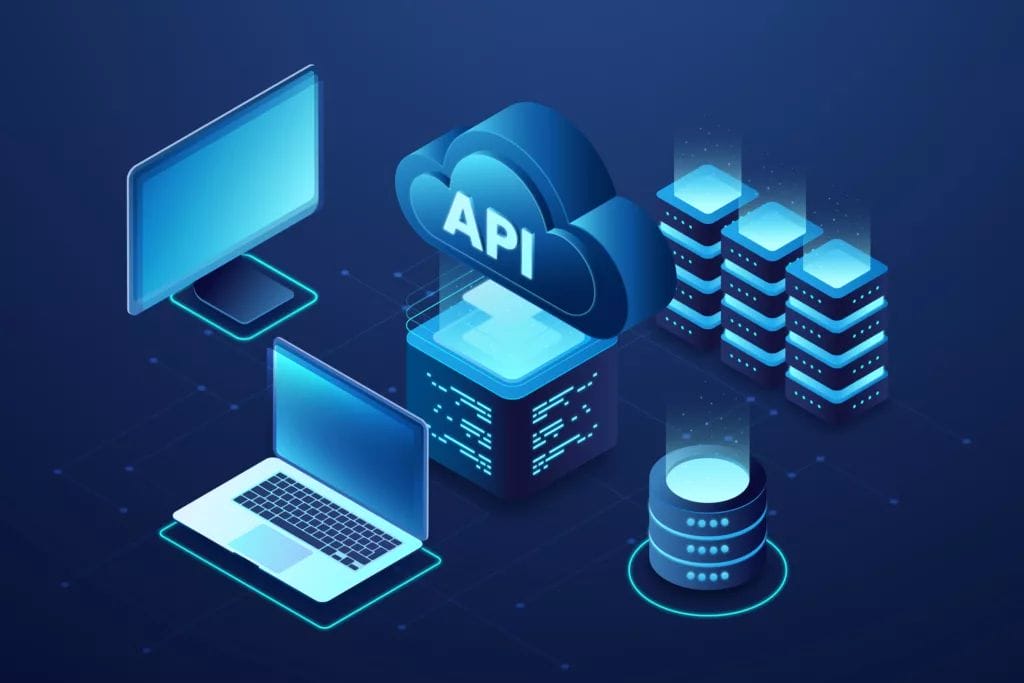
OpenAI founded its API in 2015 as the world of artificial intelligence transforms day by day. Its mission is to ensure that artificial general intelligence benefits all people. Its effective, creative, and diverse features enhance users with a lot of possibilities.
As an esteemed Artificial Intelligence app development company, OpenAI emerges as a pioneering force in AI research. With a robust API, it empowers businesses to hire AI ML developers and leverage the potential of cutting-edge models, including the formidable GPT-3. Furthermore, OpenAI’s API consists of cutting-edge models each one is customized to do its specific tasks. In this article, we will elaborate on the advantages of OpenAI API by understanding its advanced features.
What is OpenAI’s API?
APIs, or application programming interfaces, are a set of procedures and tools that allow different software systems to interconnect with one another.
From the perspective of AI, APIs provide access to advanced AI technologies, such as natural language processing (NLP), computer image, and mechanism learning (ML). It also deals with a variety of APIs that permit trades and inventors to incorporate these technologies into their products.
Types and Features of OpenAI API
Pre-trained AI Models
- GPT-4: It is a better-quality form skilled at accepting and producing text and code.
- GPT-3.5: It is a superior model for text and code formation.
- DALL·E: The provisions of DALL·E image design and adjustment are grounded on text commands.
- Whisper: It have the capability to convert audio input into written text.
- Moderation: It can detect the certainty of complex or insecure text.
Customizable AI Models
It regulates pre-trained models to exact practices, saving costs and identifying underdevelopment.
Simple API Interface
It is an in-built platform with wide-ranging identifications for quick integration.
Accessible Infrastructure
To ensure reliability and performance openAI’s infrastructure scales to meet the demands of large models.
Methods to Create an AI App Using OpenAI API
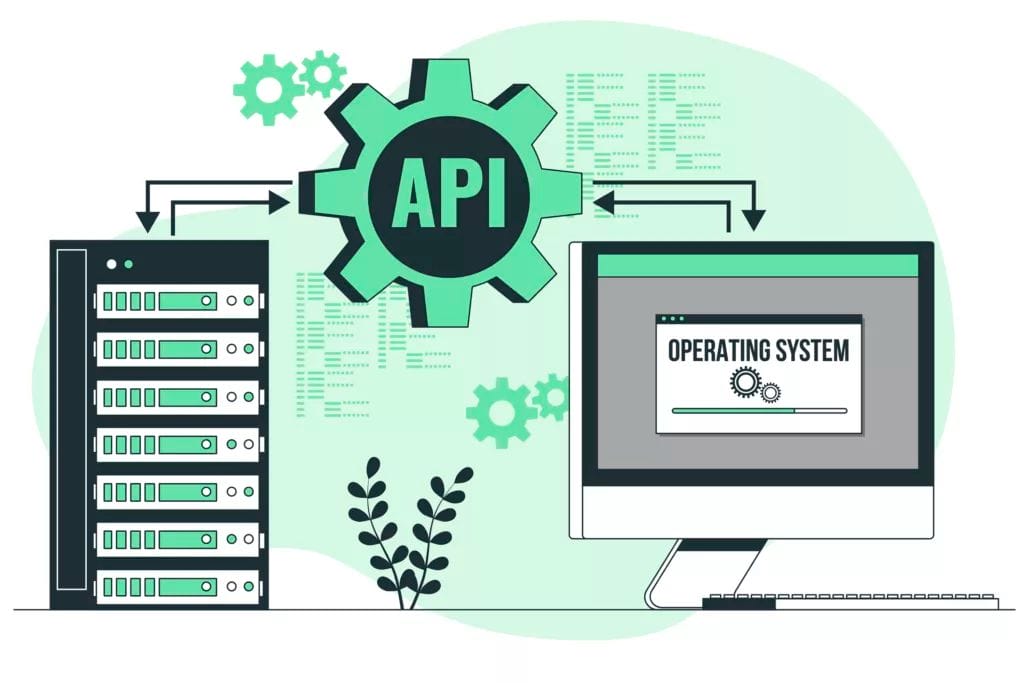
While creating an AI-based app it is essential to consider real natural language and investigate the method for modernized customer experience and improved decision-making skills.
Firstly, it is essential to do a market investigation to recognize styles; and customer matters, and comprehends OpenAI valuing and profits models. Next, it is key to research to identify trends, and consumer issues, and understand OpenAI pricing and revenue models. Similarly, comparing your app’s idea with competitors in terms of features, USP, and functionalities is vital.
Accordingly, developers should deliberate the competencies of the model and choose types that meet their requirements. The developers can integrate the model such as Codex, DALLE, or ChatGPT into the app based on business needs and budget. Finally, developers must test, debug, and deploy the developed AI app solution to ensure it is free of bugs and runs smoothly through numerous stages.
Advantages of OpenAI’s API
- Entrance to front-line technology: Businesses and coding are among the tools of developers that can use OpenAI’s API platforms of advanced AI technologies. The technological tools are deep learning, computer vision, and natural language processing. They participate in the making of unique products and services that become a rate-determining fact for any given industry.
- Mechanization of physical tasks: OpenAI provides APIs to handle huge manual inputs for organizations and programmers to concentrate more on the strategic aspects of their work, such as completion, summarization, and image generation.
- Savings of time and cost: Companies and property owners can replace labor-intensive tasks. Furthermore, they can replace outdated practices with automation, which can, therefore, reduce delays. Moreover, APIs from OpenAI include pre-trained models that reduce the expenditure of time and effort.
- Enhanced precision and productivity: OpenAI’s APIs results in an increase in its accuracy and efficiency, which can also speed up businesses’ and developers’ goal attainment. For instance, substituting manual methods with automated ones can offer more precise results, and it may also execute tasks differently and very quickly than humans.
- Access to innovative expertise: Companies and entrepreneurs can use these technologies to invent new products and services that will keep them in front of the competition in the sector where a business that is carried out.
Common challenges with OpenAI’s API
As we all know, there are some typical issues with Open AI’s API.
- Cost: Businesses need to manage their budget requirement creatively while using the OpenAI APIs because a subsequent may pay a lot for a large-scale business.
- Data Privacy and Security: Moreover, even though, openAI’s APIs use these of the customer data for training purposes, the question of data privacy and security will still occupy the debate space. Hence, businesses must check OpenAI’s care about their users’ privacy and security closely, and pay attention to their data when they get it from OpenAI’s source.
- Technical Complication: A company should spend on training and support for the new technology so that workers get accustomed to OpenAI’s APIs which may not for many are too daunting for an average worker to understand.
- Precision and Consistency: The OpenAI API is purposed for best results, but the possibility of mistakes or even imprecisions is always there. This implies that developers, with the assistance of OpenAI APIs, need to take note of the generated results.
Conclusion
Concluding, OpenAI’s API stands as a powerful tool that can support us at the beginning of a new stage of AI-driven advancement. We have discovered that OpenAI’s API, starting with the natural language processing sector covers computer vision as well. By fully utilizing the latest features, an organization will have the opportunity to overhaul the existing processes. Moreover, it makes informed decisions more easily, and ventures into unexplored territories for innovations.
As a result, how AI is employed should be governed by a moral law to regulate ethical application. With the development of AI for business, the ethical dimension assumes more and more importance. It requires corporations to implement strict transparency, obeying of rules, and accountability at all stages. We can make the most of AI’s API power by combining the expertise in tech with the values. In doing so, we will drive economic growth; shapes lives, and empower people.